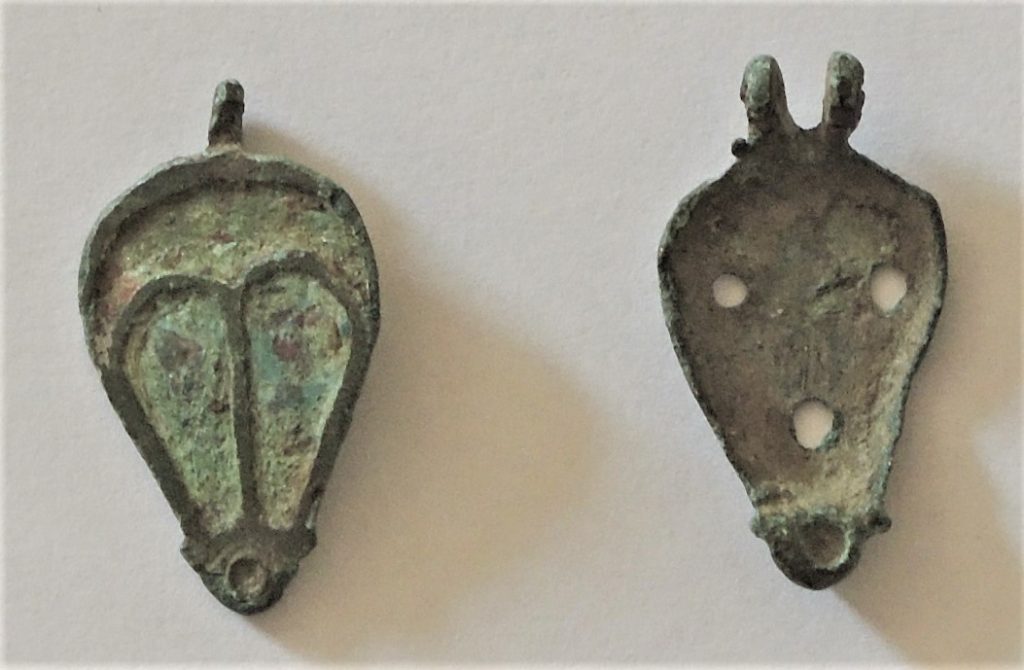
This month’s Object of the Month is a Roman seal box in its two parts: a base with three circular perforations in it, and a lid. It was found in the 1990s by a detectorist in a field on Twelve Acre Farm in Eynsham.
Seal boxes were used in the 2nd and 3rd centuries CE to secure writing tablets, letters or small packages that were sent via the Roman postal system (called the Cursus Publicus). They were usually made of bronze, and they worked as a kind of padlock on a pouch, packet or bag made of leather or fabric. People would wrap the package in cord, and thread and tie the ends of the cord through the perforations on the base. The knots would then be sealed with wax, to be broken by the recipient on receipt of the package.
Archaeologists have concluded in recent years that this seal box, together with other metal objects and pottery, indicates that a small Roman settlement existed in the area.