As we learned from the Object of the Month in July 2025*, the land in Eynsham parish in the 18th century was divided into narrow strips, in what was known as the ‘open field’ system. This system evolved into a new system of land use called the ‘enclosure’ system, in which parcels of land were separated by hedges and fences.
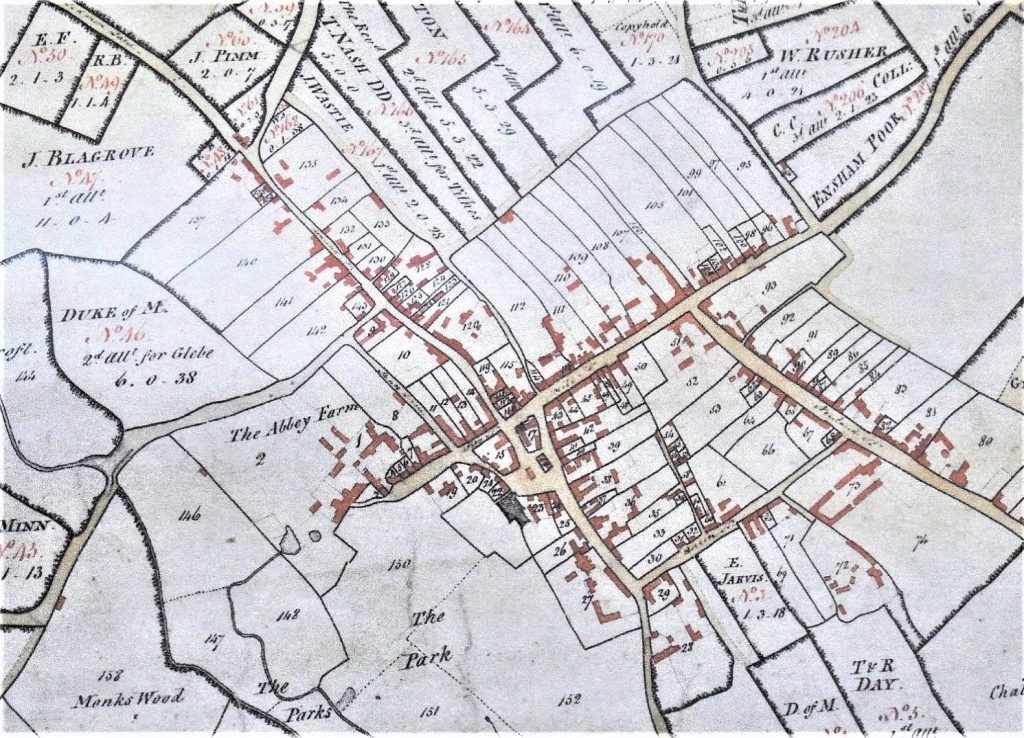
This map shows a detail from the ‘Ensham’ enclosure map of 1802. By this time, the last remaining parts of the medieval open field system and common land had been divided up amongst the major landowners.
The numbers on the map refer to the owners and occupiers of property in the village. Some of the names we can see clearly on this section of the map are: E. Jarvis (No. 3), T&R Day (No. 5), J. Wastie (No. 10), Duke of M. (No. 16), J. Blagrove (No. 47), J. Pimm (No. 60), Rev. T. Nash (No. 66) and W. Rusher (No. 204). Number 207 is allocated to ‘Ensham Poor’.
The enclosure system worked in favour of wealthier families. Landowners who wanted to increase revenue from their estates, and tenant farmers who wanted to increase their agricultural output, were those who sought authorisation through an Act of Parliament to enclose their land. Many thousands of Parliamentary Enclosure Acts were passed and, eventually, the open field system was completely eliminated.
Although the enclosure system led to more efficient land use and greater agricultural production, as ever, the most vulnerable in society lost out. Poor families, who could previously rely on using common land or very small plots of land to provide themselves with some sustenance, now found this land closed off to them and privately owned. People were forced into paid labour, and many left rural areas and migrated to urban centres, into overcrowded and unhygienic living conditions, and into very poorly paid factory jobs.
Not simply a change of land management practices, the enclosure system led to fundamental changes in society – and a rural landscape that looked very different to the past.
*You can scroll back from the bottom left of this page to find this.